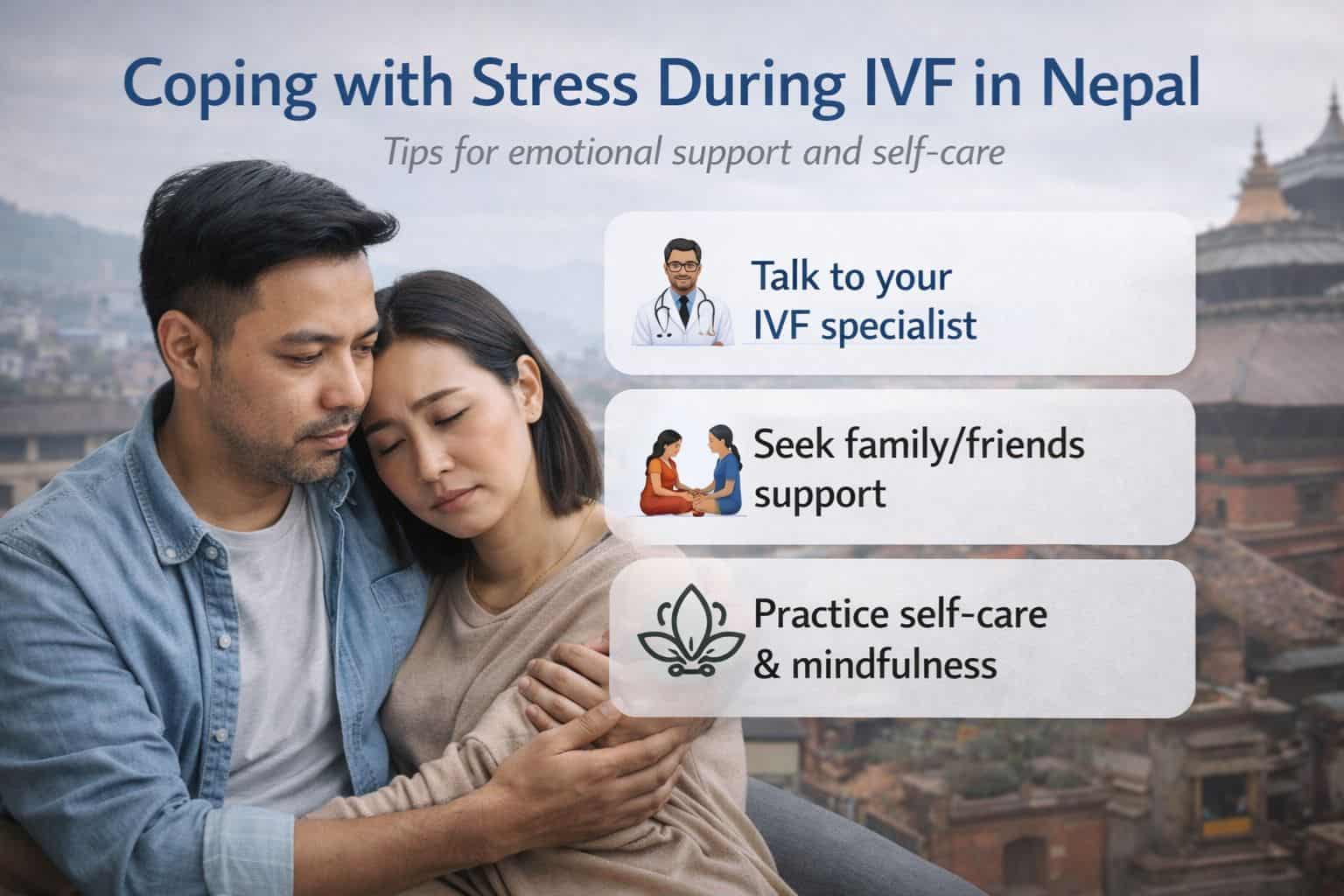
IVF is one of the most emotionally demanding medical treatments a person can go through. Research consistently shows that women undergoing IVF experience rates of anxiety and depression significantly higher than the general population, and that higher levels of psychological distress are associated with lower IVF success rates. In Nepal, these pressures are compounded by strong cultural expectations around motherhood, widespread social stigma, and the reality that women are typically blamed when a couple cannot conceive, regardless of the medical cause. Understanding what you are likely to feel, why it happens, and what genuinely helps is not a soft addition to your IVF journey. It is a clinical matter that belongs alongside your medication schedule and monitoring appointments.
How Common Is Emotional Distress During IVF?
The numbers matter here. A 2025 meta-analysis published in the Journal of Assisted Reproduction and Genetics, which analyzed 29 studies covering data from January 2004 to March 2024, found that women with higher levels of anxiety were statistically significantly less likely to achieve a clinical pregnancy following IVF or ICSI. The same analysis found a similar negative association for depression. These were not small effects, and they held up across multiple countries and study designs.
A 2024 systematic review published in PMC, which examined 36 studies on how stress affects specific IVF stages, found that most research shows stress hurts IVF treatment. The egg retrieval stage was most consistently affected by both chronic and acute stress, with possible effects on fertilization rates as well.
In Nepal specifically, a cross-sectional study conducted from November 2023 to February 2024 among 143 women visiting a fertility center in the Kathmandu Valley found that 82.5% of participants reported experiencing some level of anxiety, 51.7% reported stress, and 35.0% reported depression. Women facing social stigma had significantly elevated odds of both stress and anxiety. Those who had never conceived were more than twice as likely to experience anxiety. Women facing higher treatment costs had nearly five times the odds of anxiety compared to those with lower financial burdens.
These figures are not presented to alarm you. They are presented because understanding the scale of psychological burden during IVF explains why emotional health deserves the same clinical attention as the physical treatment itself.
Why IVF Is Specifically So Stressful?
Infertility alone is distressing. IVF layers multiple additional stressors on top.
The physical demands of the stimulation phase, with daily injections, frequent monitoring appointments, and the physical discomfort of growing follicles, all land during the same window when emotional stakes feel highest. Then comes the waiting: waiting for fertilization results, waiting to see whether embryos develop, waiting through the two-week wait. Each pause is a potential moment of loss.
The financial pressure in Nepal is real and largely unshared. There is no government insurance or public subsidy for fertility treatment in Nepal. A single IVF cycle costs NPR 2,50,000 to NPR 5,00,000 or more. For many families, this represents a significant portion of household savings. The cost alone creates a layer of stress that is not separate from the emotional experience of treatment. It is woven into it.
Then there is the uncertainty that is unlike most medical conditions. You can take every medication correctly, attend every appointment, eat well, rest, and still face a negative pregnancy test. That absence of control over the outcome, after so much physical, emotional, and financial investment, is uniquely hard to live with.
The Nepal-Specific Context: Stigma, Blame, and Social Pressure
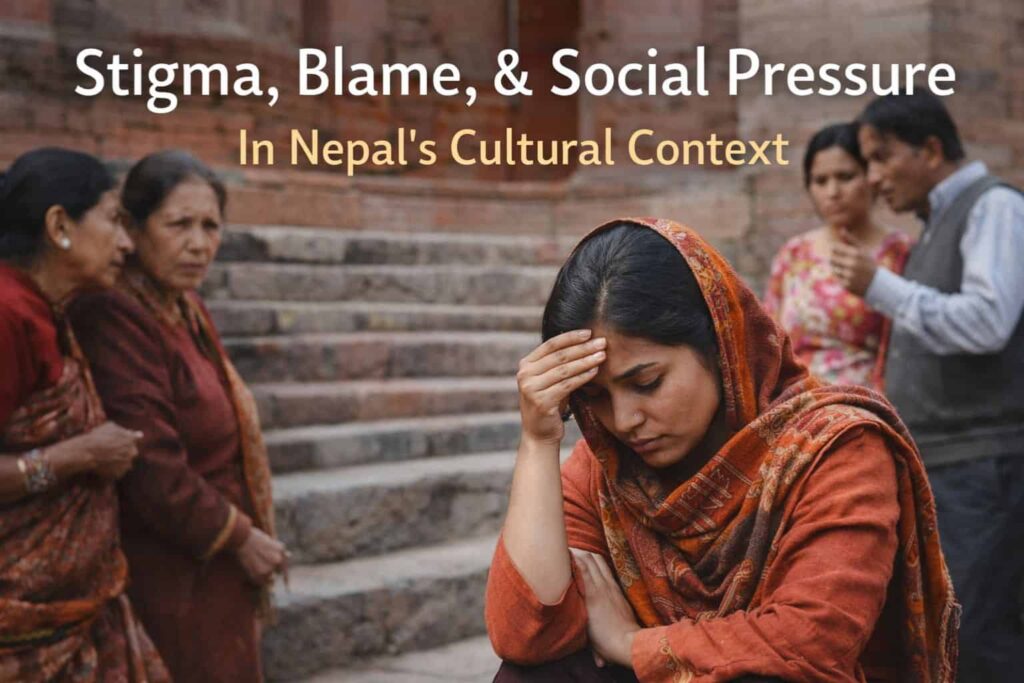
In Nepal, the emotional experience of infertility and IVF is shaped by social forces that extend well beyond the medical process.
Research published in the Journal of Balkumari College in 2025, based on case studies from Bharatpur, found that Nepali couples experiencing infertility face high levels of mental, domestic, and societal stress. Society primarily blames women for the failure to conceive, with stress levels recorded significantly higher in women than in their male partners as a result. In rural areas, infertility is sometimes attributed to ancestral anger or divine punishment, creating layers of shame that delay both medical help-seeking and open communication between partners.
Research published in BMC Women’s Health in 2026 on the psychological impact of infertility specifically in Nepal notes that in Nepal’s patriarchal social structure, where motherhood is often the primary avenue through which women gain status within the family and community, the social consequences of infertility can be severe. The woman is frequently held responsible regardless of where the medical cause actually lies. This can compromise the marriage relationship and in serious cases contribute to intimate partner pressure and abuse.
This context is not background information. It is the daily reality that many Nepali women carry into every clinic appointment. The stress they feel is not just about IVF. It is about the accumulated weight of a social expectation that has tied their worth as a person to their ability to conceive.
How Stress Affects IVF Biology?
Understanding the biological link between psychological state and IVF outcomes explains why managing stress is not simply about feeling better. It has clinical relevance.
Chronic psychological stress activates the hypothalamic-pituitary-adrenal (HPA) axis, leading to elevated cortisol levels. High cortisol can suppress the release of gonadotropin-releasing hormone (GnRH), disrupting the hormonal signaling that governs ovarian stimulation, follicle development, and ovulation. Changes in immune function associated with stress may also affect reproductive processes including uterine receptivity during implantation.
This biological connection does not mean a failed IVF cycle is your fault because you were anxious. Outcomes depend on many factors, and stress is only one of them. What it does mean is that actively addressing emotional wellbeing during treatment is clinically worthwhile, not just for how you feel but potentially for your results.
What Actually Helps: Evidence-Based Strategies
The research on psychological support during IVF is growing. Some approaches have genuine evidence behind them. Others are widely promoted but much less well-supported. Here is an honest account of what helps.
Psychological Counseling
A 2024 global review of the last decade of research on infertility and mental health, published in Fertility and Sterility, cited an exploratory randomized trial that found women who received a brief structured psychological intervention showed significant reductions in anxiety, depression, and fertility-related stress compared to a control group. The odds of achieving pregnancy were substantially higher in the intervention group. This finding comes from a single exploratory trial and needs replication, but the effect size was large enough to take seriously.
Cognitive behavioral therapy (CBT) helps patients identify and reframe unhelpful thought patterns, manage catastrophic thinking about outcomes, and develop practical coping strategies for the most difficult phases of the cycle. If your fertility clinic offers any access to counseling, use it. If it does not, speak to a psychologist independently. This is not a luxury. It is part of your treatment.
Mindfulness and Self-Compassion Practice
Mindfulness-based programs have been studied in the context of IVF with meaningful results. A randomized controlled trial published in BMC Psychiatry found that a mindfulness self-compassion intervention delivered to women undergoing IVF significantly reduced anxiety, depression, and psychological distress compared to treatment as usual. Self-compassion, specifically the capacity to treat yourself with the same kindness you would extend to someone else in your situation, is particularly relevant for Nepali women who are simultaneously navigating social stigma, family pressure, and the medical demands of a demanding fertility treatment.
In daily life, mindfulness practice does not need to be elaborate. Ten to twenty minutes of focused breathing or a body scan meditation each morning, before the day’s anxieties accumulate, is enough to make a measurable difference in how difficult emotions are managed. The goal is not to eliminate distress. It is to develop the capacity to observe it without being entirely overtaken by it.
Gentle Daily Movement
Light exercise, a 20 to 30 minute walk, gentle yoga, or stretching, supports stress hormone regulation, lifts mood through endorphin release, and helps with the bloating and physical discomfort of the stimulation phase. During stimulation the ovaries are enlarged, so vigorous or high-impact exercise should be avoided. But stopping movement entirely is counterproductive. A daily walk you genuinely look forward to is one of the most accessible and consistent forms of emotional regulation available, and it costs nothing.
Limiting Information Overload
Many women going through IVF spend hours each day reading forums, analyzing symptom lists, and searching for signs of whether their cycle is working. This is completely understandable. It is also almost universally unhelpful and tends to amplify anxiety rather than reduce it. Set a specific and limited time each day for IVF-related reading, and then stop. Your measurements and results will be interpreted by your doctor. No forum thread will predict your specific outcome.
Talking Honestly with Your Partner
Spousal support consistently appears in research as a protective factor against psychological distress during infertility treatment. Partners often process the emotional weight of IVF differently. Many Nepali men feel helpless during the female-centered experience of injections, monitoring, and waiting. They want to fix something they cannot fix. Naming this explicitly, telling each other what you actually need rather than what you assume the other person wants to hear, creates space for genuine support instead of parallel isolation.
IVF is happening to both of you. The grief, hope, fear, and exhaustion are shared experiences even when they are expressed differently. Treating the cycle as a joint emotional journey, rather than a procedure the woman goes through alone, matters for the relationship and for both partners’ mental health.
Managing Social Scrutiny
Nepali families and communities ask questions. They often mean well. The questions about children are frequently a form of care, even when they land as pressure. You are not obligated to tell anyone you are undergoing IVF. Deciding in advance, ideally together with your partner, what you will share and with whom removes a significant source of ongoing stress. A small number of people who will support without adding expectation is far more valuable than broad disclosure that turns your treatment cycle into a group event.
What to Expect Emotionally at Each Stage of IVF?

Different phases of the cycle carry distinct emotional patterns. Knowing them in advance does not prevent them, but it makes them less frightening when they arrive.
Stimulation phase. Hormone injections produce real mood effects. Progesterone and estrogen fluctuations can cause irritability, tearfulness, or emotional flatness that feels disconnected from your circumstances. Knowing that this is partly pharmacological, not a reflection of your psychological state, is genuinely helpful. Physical discomfort from bloating adds to the emotional load. This is typically the phase when women feel most physically burdened.
Egg retrieval day. Anxiety peaks around the retrieval procedure itself, and then often shifts into a combination of relief and renewed dread as you wait for the fertilization call the following morning. That call, telling you how many eggs fertilized, is one of the most emotionally weighted moments in the entire cycle.
Embryo development wait. The five to six days while embryos develop in the laboratory is a sustained state of hope mixed with fear. Some couples find this phase easier than the two-week wait because something concrete is happening. Others find the uncertainty of each developmental checkpoint very hard to sit with.
Two-week wait. This is the phase most consistently described as the most difficult of all. You have done everything possible. Nothing you do now changes what is happening. The only task is to wait. Managing this period requires deliberate planning: filling your days with absorbing activity, limiting symptom-checking, maintaining as much of your normal routine as you can, and having people available to talk to.
Results day. A positive result carries its own form of anxiety, about early pregnancy, continued medication, and whether hCG levels will rise as they should. A negative result is a real loss. It deserves to be grieved honestly, not dismissed or bypassed quickly in a rush toward planning the next attempt.
When to Reach Out for More Help?
Some level of emotional distress during IVF is expected and does not require formal intervention. There are signs, though, that suggest it is time to speak with a psychologist or counselor rather than managing alone.
Persistent inability to sleep over more than a few days, complete withdrawal from activities you normally find meaningful, persistent feelings of worthlessness or hopelessness that are not clearly connected to specific IVF events, thoughts of harming yourself, and significant deterioration in your relationship are all signs that the distress has moved beyond what self-management can address. This level of psychological suffering during fertility treatment is common enough that clinical support exists specifically for it, and it is responsive to professional intervention.
In Nepal, access to mental health professionals with specific experience in fertility counseling is limited but growing. Speaking honestly with your fertility specialist at Sishu Fertility Clinic is the right first step. Asking directly whether any counseling support is available at your clinic, or requesting a referral, is not a sign of weakness. It is good clinical judgment.
After a Failed Cycle: Moving Through It
A failed IVF cycle is a loss. It deserves to be acknowledged and grieved, not immediately replaced with planning the next cycle. Allowing yourself real time to process what happened before deciding on next steps is not giving up. It is giving yourself the psychological space to make a considered decision from a more stable foundation.
Many women describe needing to reassess after a failed cycle, not just medically but personally. Questions that felt settled during active treatment, including how many cycles to try, whether donor options are worth exploring, or what a life without children might look like, often surface during this period. That is not a crisis. It is an honest reckoning that most people going through IVF eventually face, and it deserves time.
Your doctor at Sishu will review what happened in the cycle, assess whether protocol changes could improve outcomes, and talk through your realistic options when you are ready. That conversation does not have to happen immediately. Take the time you need. Then come back and have it.
If you want to understand more about what causes IVF to fail and what can be adjusted in subsequent cycles, read our Why Does IVF Fail page.
Related Question About IVF Over 40 in Nepal
Does stress cause IVF to fail?
Stress is associated with lower success rates in research, but the relationship is not simple or directly causal. Many women who experience significant anxiety during IVF do conceive. Many who feel relatively calm do not. Stress is one factor among many. A failed cycle is never simply the result of not being relaxed enough, and telling yourself that it is would not be fair or accurate.
Is it normal to feel depressed or anxious during IVF?
Yes. Research consistently shows that rates of depression and anxiety among IVF patients are significantly higher than in the general population. This is an expected response to a genuinely difficult situation, not a sign of weakness or inadequacy.
How should I handle questions from family about having children?
You are not obligated to tell anyone you are doing IVF. Decide in advance, with your partner, what you are willing to share and with whom. For people who ask directly, a simple “we are working on it” or “we would rather not discuss it right now” is a complete and dignified response.
What can my partner do to help?
Be present. Take practical tasks off your partner’s list during the most difficult phases. Do not require your partner to manage your emotions on top of their own. Sit with uncertainty without trying to fix it. Express care without turning every day into a check-in on symptoms or feelings.
Should I take time off work?
This is individual. Some women find work provides healthy distraction and a sense of normalcy. Others find the dual demand overwhelming, especially during egg retrieval recovery or the two-week wait. If your work is highly stressful or physically demanding, a brief reduction in hours may be worth discussing with your employer. Your clinic can provide documentation if needed.
What if this cycle fails? How do I cope?
Allow yourself to grieve without immediately moving into planning mode. Talk to your partner. Lean on the people you trust. Give yourself a defined period to process the result before making decisions about next steps. When you are ready, your doctor will walk through what happened, whether protocol changes are appropriate, and what your options are.
For more on the IVF process itself and what to expect at each stage, visit our website. If you have questions about your specific situation or want to talk with a specialist about the emotional and medical side of treatment together, book a consultation at our Chitwan (CMS Road, Bharatpur) or Dang (BP Chowk, Ghorahi) clinic.