A single IUI cycle in Nepal typically costs NPR 10,000 to NPR 30,000 for the core procedure – but that figure rarely reflects what a patient actually pays. Add ovulation-stimulating medication, monitoring scans, pre-treatment testing, or donor sperm, and a “stimulated” cycle can run well beyond that headline number, sometimes into the NPR 40,000–60,000 range once medicines and extra scans are included. Because most patients need more than one cycle, understanding the full cost structure – not just the advertised fee – is what actually determines the fertility budget.
For the exact IUI treatment cost at Sishu IVF Clinic, including what is covered in the treatment package, contact our team on WhatsApp at +977 9828839269.
This guide breaks down every component of IUI pricing in Nepal, explains the clinical steps that drive those costs, and compares IUI against IVF so patients can plan realistically rather than working from a single quoted number.
How Much Does IUI Treatment Cost in Nepal?
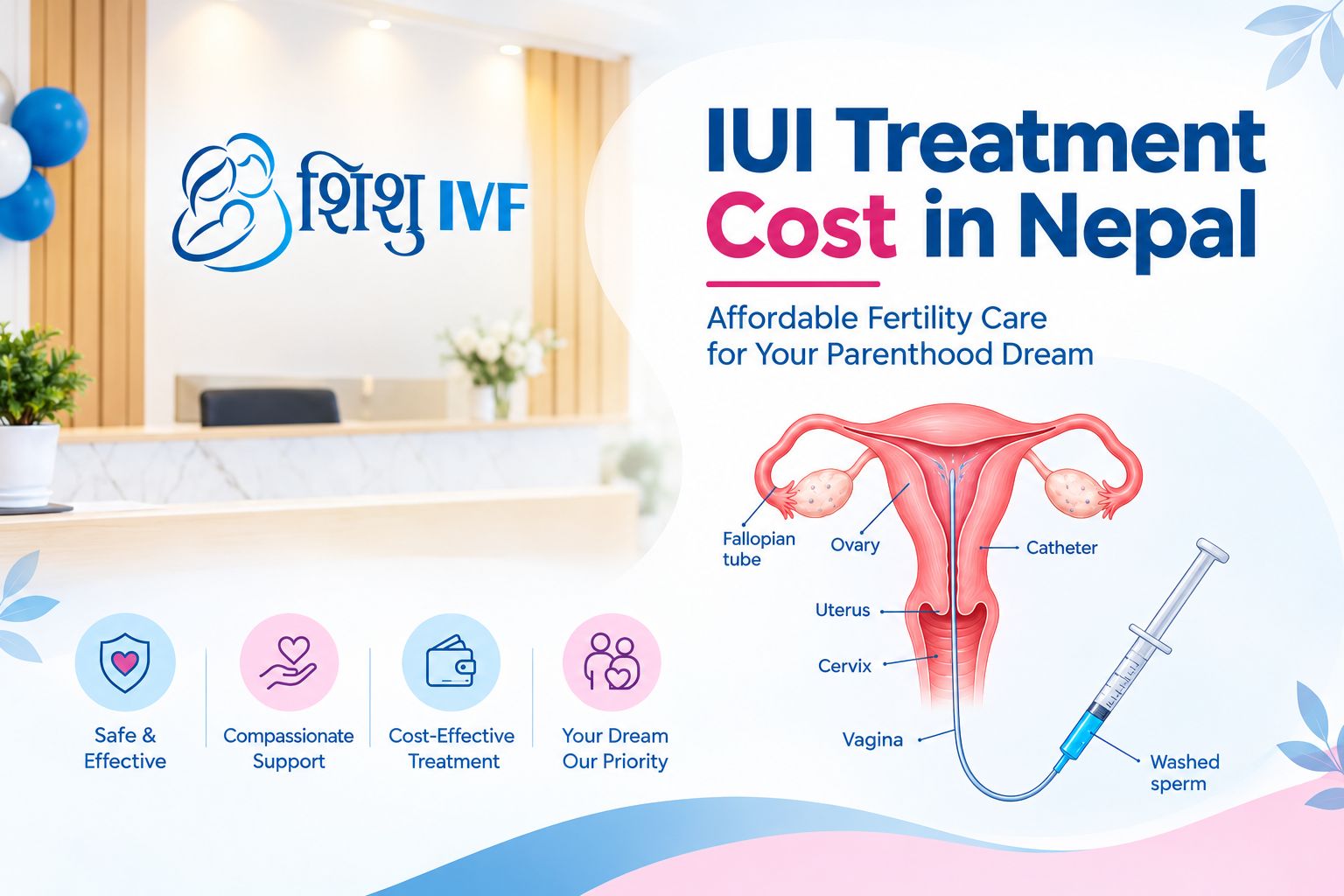
The NPR 10,000–30,000 base range quoted by most Nepali fertility centres generally covers the insemination procedure itself: sperm washing and the catheter-based placement of sperm into the uterus. What it often does not cover, unless explicitly stated in the package, is medication, monitoring ultrasounds, or diagnostic workup.
The table below breaks the cycle into its components with realistic, typical ranges reported by fertility clinics in Nepal. These are indicative, not fixed, always ask for a written, itemized quote before starting treatment.
| Cost component | What it covers | Typical range (indicative) |
|---|---|---|
| Initial fertility consultation | History review, examination, treatment planning | NPR 1,000 – 3,000 |
| Baseline diagnostic tests | Semen analysis, hormone panel, pelvic ultrasound | NPR 3,000 – 10,000 |
| Ovulation/follicular monitoring | 1–4 ultrasound scans depending on cycle type | NPR 1,500 – 4,000 per scan |
| Fertility medication (natural cycle) | None or minimal | NPR 0 |
| Fertility medication (stimulated cycle) | Oral tablets or injectable gonadotropins | NPR 3,000 – 25,000+ |
| Sperm preparation (washing) | Lab processing to concentrate motile sperm | Often bundled into procedure fee |
| IUI procedure | Catheter-based insemination | NPR 8,000 – 20,000 |
| Donor sperm (if used) | Screened, frozen donor sample | NPR 10,000 – 30,000 additional |
| Follow-up + pregnancy test | Post-procedure review, beta-hCG or urine test | NPR 500 – 2,000 |
A natural-cycle IUI with minimal monitoring can land near the lower end of the NPR 10,000–30,000 range. A stimulated cycle with injectable medication and multiple monitoring scans can realistically total NPR 35,000–55,000 once every line item is added, even though the “IUI procedure fee” quoted by the clinic may still read NPR 15,000–20,000.
What Is Included in the Cost of IUI?
A complete IUI cycle has three clinical phases, and cost accumulates across all three, not just at the procedure itself.
Phase 1: Fertility Consultation
The consultation is where the treatment plan is actually decided, not just a formality before booking a procedure date. The specialist reviews:
- Menstrual and ovulation history
- Previous pregnancies, miscarriages, or fertility treatments
- Duration of difficulty conceiving (generally 12 months for women under 35, or 6 months for women over 35, is the conventional threshold for starting an infertility workup)
- Semen analysis results, if already available
- Relevant hormonal investigations (FSH, LH, TSH, prolactin, AMH)
This consultation also determines whether IUI is the right pathway at all, versus IVF or a different intervention, a decision covered in more detail below.
Phase 2: Fertility Testing
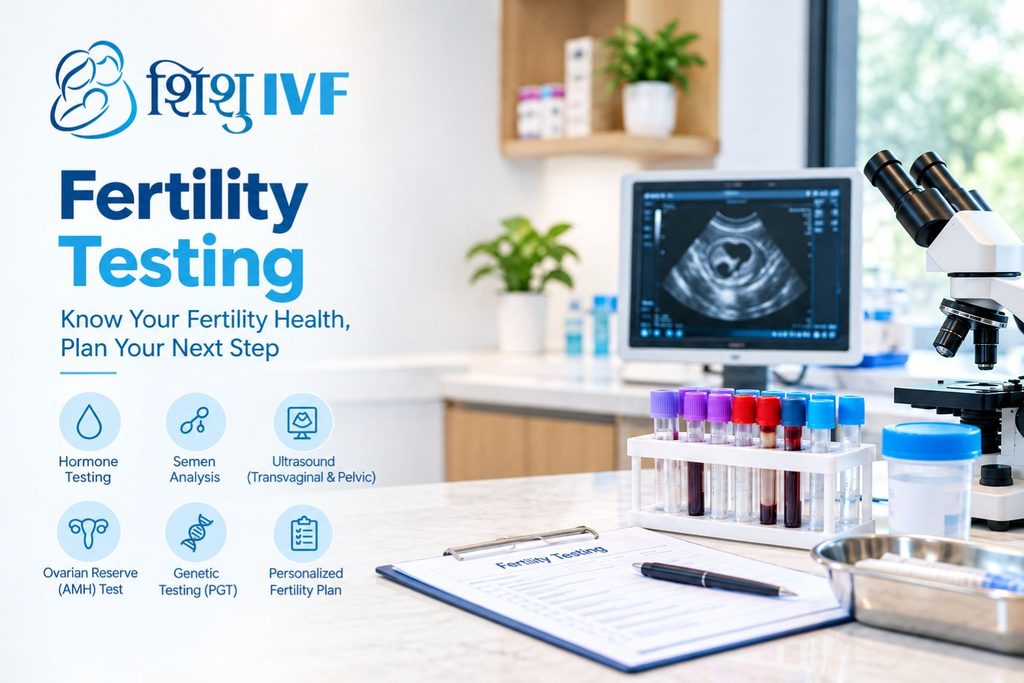
Testing narrows down why conception isn’t happening and confirms IUI is technically viable. Two tests are non-negotiable before any IUI cycle:
- Semen analysis – confirms whether sperm concentration and motility are adequate for a washed sample to reach a usable post-wash count (see the sperm-washing section below).
- Tubal patency assessment (commonly a hysterosalpingogram, HSG) – confirms at least one fallopian tube is open. IUI relies on natural fertilization inside the tube, so a fully blocked pair of tubes makes IUI clinically pointless regardless of sperm quality.
Depending on history, additional tests can include ovarian reserve testing (AMH), a baseline pelvic ultrasound, and cycle-day hormone bloodwork. Not every patient needs every test – a 27-year-old with regular cycles and no prior surgery needs a much shorter workup than a 38-year-old with irregular cycles.
Phase 3: The Treatment Cycle
This is where ovulation tracking, medication (if used), sperm preparation, insemination, and the pregnancy test happen – covered step-by-step later in this guide.
Does Natural-Cycle IUI Cost Less Than Stimulated IUI?
Yes, and the cost gap is one of the larger variables in IUI pricing.
Natural-cycle IUI relies on the patient’s own ovulation, tracked with ovulation predictor kits, occasional bloodwork, or a single confirmatory ultrasound. Medication cost is zero or minimal, and monitoring is limited to one or two visits.
Stimulated IUI uses fertility medication to grow one or more follicles under closer supervision, which changes the cost profile in two ways: the medication itself, and the additional ultrasound visits needed to track follicle growth safely.
What medications are actually used, and what do they cost?
| Medication type | Examples | Typical role | Relative cost |
|---|---|---|---|
| Oral anti-estrogens | Clomiphene citrate | First-line ovulation induction | Lowest cost |
| Aromatase inhibitors | Letrozole | Preferred first-line for PCOS; fewer multiples than clomiphene | Low cost |
| Injectable gonadotropins | FSH/hMG-based injectables (e.g., products containing follicle-stimulating hormone, alone or combined with luteinizing hormone) | Used when oral medication doesn’t produce an adequate response | Highest cost, and requires the most monitoring |
Oral medication is the more affordable and more common starting point; injectable gonadotropins produce a stronger ovarian response but cost more and require tighter ultrasound monitoring because they carry a higher risk of over-response.
Why stimulated cycles need more monitoring – and what’s at stake
Ultrasound tracking during a stimulated cycle isn’t just about timing insemination correctly, it’s a safety check. When stimulation produces more than two or three mature follicles in a single cycle, the chance of a multiple pregnancy (twins, or less commonly triplets) rises meaningfully, oral-medication cycles carry a roughly 8–10% chance of twins, according to published fertility literature, compared with a low single-digit percentage in a typical natural or single-embryo IVF cycle. If monitoring shows an excessive response, a fertility specialist may adjust the medication dose, delay the trigger, or in some cases recommend cancelling that cycle rather than proceeding to insemination, which is part of why stimulated cycles cost more: the monitoring exists specifically to keep that risk in check.
What Is Sperm Washing, and Why Does It Affect Whether IUI Can Proceed?
Sperm washing separates motile, healthy sperm from seminal fluid, debris, and non-motile sperm, using techniques such as density-gradient centrifugation or a swim-up method. The result is a concentrated sample suitable for direct placement into the uterus (raw, unwashed semen cannot be used this way, it would cause severe uterine cramping and infection risk).
The number that actually matters clinically is the post-wash total motile sperm count (TMSC). Most labs look for a post-wash TMSC of roughly 5 to 10 million motile sperm before proceeding with insemination; below that range, per-cycle success drops substantially, and a fertility specialist may recommend switching directly to IVF (with or without ICSI) rather than continuing with IUI. This is a key reason semen analysis happens before the treatment cycle begins, a poor baseline count can change the entire treatment plan, and the cost that goes with it, before medication is ever prescribed.
How an IUI Treatment Cycle Actually Unfolds, Day by Day
| Cycle day (approximate) | What happens |
|---|---|
| Day 2–3 | Baseline ultrasound and bloodwork (stimulated cycles); medication started if used |
| Day 3–9 | Oral medication course, if prescribed (typically 5 days) |
| Day 8–12 | Follicular monitoring ultrasounds begin; dose adjusted based on response |
| Day 11–14 | Trigger injection given once a lead follicle reaches maturity |
| 24–36 hours after trigger | Sperm sample collected and washed; insemination performed via thin catheter |
| ~14 days after insemination | Pregnancy test (blood or urine) |
The insemination itself takes only a few minutes and is generally not painful, though some patients experience mild cramping. The full cycle, from the first scan to the pregnancy test, typically spans roughly two to three weeks.
Does Donor Sperm Increase the Cost?
Yes. Donor sperm must be frozen and quarantined while the donor is screened for infectious diseases and select inherited conditions, which adds laboratory, storage, and donor-program charges on top of the standard IUI fee. The exact add-on cost depends on the source of the donor sample and the clinic’s donor program, but patients should budget for a meaningfully higher total than a cycle using a partner’s fresh sample.
How Many IUI Cycles Are Needed, and What Does That Do to Total Cost?
This is where the real budget conversation happens, because per-cycle pricing understates what most patients actually spend.
For unexplained infertility, published clinical guidance commonly points to three to four cycles of medicated IUI as reasonable before moving to IVF, beyond that point, cumulative success gains taper off and IVF typically becomes the more time- and cost-efficient path. (Certain specific clinical situations, such as an inability to have vaginal intercourse for a diagnosed physical or psychosexual reason, or particular donor-sperm circumstances, are treated differently under current NICE guidance, which can support a longer course of unstimulated IUI in those specific cases.)
Illustrative cumulative cost example (stimulated cycles, mid-range pricing)
| Number of cycles | Approx. cost per cycle | Approx. cumulative cost |
|---|---|---|
| 1 cycle | NPR 35,000 | NPR 35,000 |
| 3 cycles | NPR 35,000 | NPR 105,000 |
| 4 cycles | NPR 35,000 | NPR 140,000 |
These figures are illustrative, built from the component ranges above, not a quote. They exist to make one point concrete: a patient budgeting only for “one IUI cycle” is often budgeting for roughly a quarter of what the full treatment course will actually cost.
Is IUI Cheaper Than IVF in Nepal?
Substantially, yes, and the gap is large enough to shape treatment decisions on its own. A single IVF cycle in Nepal generally costs in the range of NPR 250,000 to 500,000, several times the cost of even a fully-loaded, multi-scan stimulated IUI cycle. That gap exists because IVF adds stages IUI doesn’t need: full ovarian stimulation with heavier medication dosing, a surgical egg retrieval, laboratory fertilization, embryo culture, and embryo transfer, each with its own equipment, embryology staff time, and consumables.
| Feature | IUI | IVF |
|---|---|---|
| Fertilization location | Inside the body | Laboratory |
| Egg retrieval | Not required | Required (minor surgical procedure) |
| Embryo culture/transfer | Not required | Required |
| Typical Nepal cost per cycle | ~NPR 10,000–55,000 | ~NPR 250,000–500,000 |
| Per-cycle success (under 35) | ~15–20% | Considerably higher per cycle, but at much greater cost |
| Multiple-pregnancy risk | Present with stimulated cycles | Lower with modern single-embryo transfer protocols |
Because of this cost gap, IUI is usually tried first for suitable diagnoses, with IVF reserved for cases where IUI has a low chance of success from the start (severely low sperm counts, blocked tubes, advanced maternal age, or repeated IUI failures).
Who Is IUI Actually Suitable For?
IUI is a reasonable first step for:
- Unexplained infertility (the single largest category of IUI patients)
- Mild-to-moderate male-factor infertility, where post-wash TMSC still clears the usable threshold
- Ovulatory disorders, once ovulation is being induced or supported with medication
- Donor sperm treatment for single patients or same-sex couples
- Situations where intercourse is not possible for a diagnosed physical or psychosexual reason
IUI is generally not recommended, or has a low chance of success, when:
- Both fallopian tubes are blocked (fertilization cannot happen naturally)
- Sperm quality is severely impaired and post-wash TMSC falls well below the usable threshold
- The female partner is over roughly 40, where per-cycle IUI success is low enough that IVF is usually the more efficient path
- Endometriosis is moderate-to-severe
A fertility specialist confirms suitability during the initial consultation and tests, this is why skipping straight to “book the procedure” without a proper workup can waste both time and money on cycles unlikely to succeed.
What Is the Real Success Rate of IUI?
Success rates are consistently reported as a per-cycle percentage, and age is the single strongest predictor.
| Female age | Approximate per-cycle success rate |
|---|---|
| Under 35 | ~15–20% |
| 35–40 | ~8–12% |
| 40–42 | ~5–10% |
| Over 42–43 | Below 5% |
These ranges come from pooled clinical data and vary by diagnosis, sperm quality, and whether medication is used – a clinic’s own reported outcomes for its specific patient population is always more relevant to an individual patient than a general table like this one.
Two things worth understanding about these numbers:
- They compound with repeated cycles. A per-cycle rate of roughly 12–15% translates to a meaningfully higher cumulative chance across three or four cycles – one reason specialists often recommend committing to a short course rather than judging IUI on a single attempt.
- They decline faster after the mid-to-late 30s than most patients expect. This is a major reason specialists shorten the recommended number of IUI attempts – and move to IVF sooner – for patients in their late 30s or beyond, rather than applying the same “try three or four cycles first” advice used for younger patients.
Why Does IUI Cost Differ Between Fertility Clinics in Nepal?
Two clinics quoting NPR 15,000 and NPR 28,000 are rarely offering the same thing. Before comparing headline prices, confirm whether each quote includes:
- Initial consultation
- Baseline diagnostic tests (semen analysis, hormone panel)
- Ultrasound monitoring, and how many scans are covered
- Fertility medication, and which type (oral vs. injectable)
- Sperm washing/preparation
- The insemination procedure itself
- Pregnancy testing
- A follow-up consultation
- Donor sperm charges, if applicable
A lower headline number that excludes medication and monitoring can end up costing more than a higher number that bundles everything, the only way to know is to ask for a full itemized breakdown before committing.
IUI Cost and Access Across Nepal
Kathmandu has the largest concentration of fertility centres and the widest range of package options, but fertility care is also available outside the valley, including centres in Bharatpur, Butwal, and Ghorahi. For patients outside Kathmandu, the real cost comparison isn’t just the procedure fee, it includes:
- Travel and, where needed, accommodation for a treatment cycle that requires 3–5 clinic visits over roughly two weeks
- Whether follow-up monitoring can be done locally or requires returning to a central clinic
- Whether local labs can process semen analysis and hormone tests, or samples need to be sent elsewhere
A clinic closer to home with slightly higher listed prices can still work out cheaper overall once travel and time off work are factored in – a genuine cost comparison should include both.
Planning an IUI Treatment Budget
A realistic IUI budget has four stages:
Before the cycle: consultation, semen analysis, hormonal workup, baseline ultrasound, and, if not already done, a tubal patency test.
During the cycle: medication (if stimulated), 1–4 monitoring scans, sperm collection and washing, and the insemination procedure.
After the procedure: the pregnancy test and a follow-up consultation to review the result and plan next steps.
Across cycles: because most successful IUI pregnancies happen within the first three to four cycles, budgeting for a single attempt usually understates the real cost of the treatment path – plan around a short course, not one procedure.
Frequently Asked Questions About IUI Cost in Nepal
How much does one IUI cycle cost in Nepal?
The base procedure typically falls between NPR 10,000 and NPR 30,000. A stimulated cycle with medication and multiple monitoring scans commonly totals NPR 35,000–55,000 once every component is included.
Is IUI cheaper than IVF?
Yes, substantially, a full IVF cycle in Nepal generally costs NPR 250,000–500,000, several times the cost of even a fully-loaded IUI cycle, because IVF requires egg retrieval, laboratory fertilization, and embryo transfer.
Are medicines included in the IUI price?
Not automatically. Oral medication (clomiphene citrate or letrozole) adds a modest cost; injectable gonadotropins cost considerably more and require closer monitoring.
What sperm count is needed for IUI to proceed?
Labs generally look for a post-wash total motile sperm count of roughly 5–10 million; counts well below that range are associated with lower success and can shift the recommendation toward IVF instead.
Does stimulated IUI carry a risk of twins?
Yes, oral-medication cycles carry roughly an 8–10% chance of a twin pregnancy, which is why follicle-tracking ultrasounds are part of the monitoring cost in stimulated cycles.
How many IUI cycles are typically recommended before switching to IVF?
For unexplained infertility, three to four medicated cycles is a common benchmark; specific diagnoses and donor-sperm situations can follow different guidance, and age can shorten this course.
Does age affect IUI success?
Significantly. Per-cycle success is roughly 15–20% under 35, drops to roughly 8–12% between 35 and 40, and falls below 10%, often below 5%, after 40.
Can donor sperm be used for IUI?
Yes. Donor sperm is frozen and screened before use, which adds laboratory and donor-program charges on top of the standard procedure fee.
Is IUI painful?
Generally not, the procedure uses a thin catheter and takes only a few minutes, though some patients experience mild, short-lived cramping.
Can IUI guarantee pregnancy?
No fertility treatment can. Success depends on age, diagnosis, sperm quality, ovulation, and how many cycles are attempted.
Where to Get IUI Treatment in Nepal
Fertility centres operate in Kathmandu and in several cities beyond the valley. Sishu IVF provides fertility care in Bharatpur, Butwal, and Ghorahi, giving patients from Chitwan, Dang, Lumbini Province, and surrounding areas access to consultation, diagnostic testing, and IUI treatment without necessarily needing to travel to Kathmandu for every visit.
The single most useful first step is a personalized fertility consultation, because the correct treatment plan, the realistic number of cycles, and the true total cost all depend on individual test results, not a generic price list.
Reference:
1. CNY Fertility