You can improve your IVF success rate by starting lifestyle changes at least 2 to 3 months before your cycle begins. The steps that make the biggest difference are diet, weight, quitting smoking, managing stress, taking your medication exactly as prescribed, and choosing a clinic with a strong embryology lab. All of these have real research behind them. In Nepal, where a single IVF cycle costs NPR 2,50,000 to NPR 5,00,000, doing everything possible to improve your chances before and during treatment is not just helpful. It is essential.
This guide covers only steps that have genuine evidence behind them. No myths. No wishful thinking.
Why Your Choices Before IVF Actually Matter
Most people think IVF success is entirely in the doctor’s hands. That is not quite true.
Your eggs take approximately 3 months to mature before they are retrieved. Your partner’s sperm takes about 2.5 months to develop. What both of you eat, drink, smoke, and weigh during those months directly affects the quality of the eggs and sperm that will be used in your treatment.
Starting changes only the week before your cycle is too late. The preparation window is 2 to 3 months before stimulation begins.
Tip 1: Follow a Mediterranean-Style Diet
This is the single most researched dietary approach for IVF outcomes, and the results are consistent.
A 2022 meta-analysis published in PMC, covering 13 studies and 3,638 IVF patients, found that women who followed a Mediterranean dietary pattern had nearly twice the live birth rate compared to those who did not (OR: 1.98; 95% CI: 1.17 to 3.35).
A 2024 literature review in Nutrients (7 studies, 2,321 women) found that 3 out of 7 studies showed statistically significant improvements in clinical pregnancy and live birth rates among women with higher Mediterranean diet scores.
The original Karayiannis 2018 study (244 women, Athens IVF unit) found that among women under 35, a 5-point increase in Mediterranean diet adherence was associated with approximately 2.7 times higher likelihood of achieving clinical pregnancy and live birth.
What a Mediterranean Diet Looks Like in Nepal
You do not need European foods to follow this pattern. Nepal has excellent local equivalents:
| Mediterranean Food | Nepal Equivalent |
| Leafy greens (spinach, kale) | Saag, methi, mustard leaves |
| Whole grains | Brown rice, dhindo (buckwheat/millet) |
| Legumes | Masoor dal, chana, black dal |
| Oily fish (omega-3 rich) | Rohu, mackerel, sardines |
| Olive oil (healthy fat) | Mustard oil, flaxseed oil |
| Nuts and seeds | Walnut, almonds, sesame (til) |
| Fruits and vegetables | Seasonal local produce |
Eat more of: colourful vegetables, legumes, whole grains, fish, nuts, and seeds.
Eat less of: white rice in excess, deep-fried foods, processed meats, packaged snacks, and foods high in refined sugar.
Tip 2: Reach a Healthy Weight Before Starting
Body weight directly affects how your ovaries respond to stimulation medications and how the uterus supports implantation.
Research consistently shows:
- Women with a BMI above 30 have a significantly lower probability of live birth after IVF compared to women with a healthy BMI of 18.5 to 24.9
- Being underweight (BMI below 18.5) also disrupts hormone production and ovarian response
- Both conditions affect how your body responds to FSH injections during stimulation
For men: obesity raises scrotal temperature, reduces testosterone, and lowers sperm quality. All of these affect fertilisation rates in IVF.
Even a 5 to 10% reduction in body weight before starting treatment can improve ovarian response and embryo quality for women who are overweight.
Important: Do not crash diet in the weeks immediately before your IVF cycle. Extreme calorie restriction during stimulation is harmful. The goal is gradual, steady improvement over 2 to 3 months. Rapid weight loss right before treatment is not the answer.
Tip 3: Both Partners Must Stop Smoking Completely
Smoking is one of the most clearly documented factors that reduces IVF success, and it affects both men and women.
For women:
- Smoking damages egg DNA and accelerates the loss of ovarian follicles
- Smokers respond more poorly to ovarian stimulation, producing fewer eggs
- Smoking increases miscarriage rates after IVF
For men:
- Male smoking significantly increases the risk of pregnancy loss in IVF cycles (p = 0.029, Firns et al., Reproductive Biology and Endocrinology)
- Smoking damages sperm DNA, which can cause failed fertilisation and poor embryo development
Nicotine patches and e-cigarettes are also not safe during IVF preparation. The nicotine itself is the problem, not only the smoke.
Stop smoking at least 3 months before starting your cycle. Both partners, not only the woman.
Tip 4: Stop or Strictly Limit Alcohol
Alcohol has a measurable negative effect on IVF outcomes at amounts that most people consider moderate.
A large study of 2,545 couples, published in Reproductive Biology and Endocrinology via PMC, found that:
- Women who consumed 4 or more alcoholic drinks per week had a 16% lower chance of live birth compared to women who drank less
- When both partners consumed 4 or more drinks per week, the chance of live birth was 21% lower
These figures are not from heavy drinkers. They are from people drinking what many consider a normal social amount.
The safest approach during IVF preparation and treatment is no alcohol at all. If complete abstinence feels difficult, at minimum stay below 4 drinks per week. Ideally, stop completely from the start of stimulation onwards.
Tip 5: Start the Right Supplements With Your Doctor’s Guidance
Not every supplement sold for “fertility” has evidence behind it. These are the ones that do:
| Supplement | Evidence | Who It Is For |
| Folic acid (400 to 800 mcg/day) | Strong. Reduces neural tube defects and supports early embryo development | All women preparing for IVF |
| CoQ10 (Coenzyme Q10) | Moderate. May improve egg quality, particularly in women over 35 or with poor ovarian reserve | Women over 35 or with low AMH |
| Omega-3 fatty acids | Moderate. May improve endometrial receptivity and embryo quality | Both partners |
| Vitamin D | Moderate. Low Vitamin D is associated with poorer IVF outcomes. Get tested before supplementing | Both partners (get blood test first) |
| Zinc and Selenium | Moderate. Antioxidants that support sperm DNA integrity | Men |
Do not take high doses of anything without checking with your fertility doctor first. Some supplements interact with IVF medications or are harmful in excess.
Tip 6: Do Moderate Exercise But Stop Intense Training
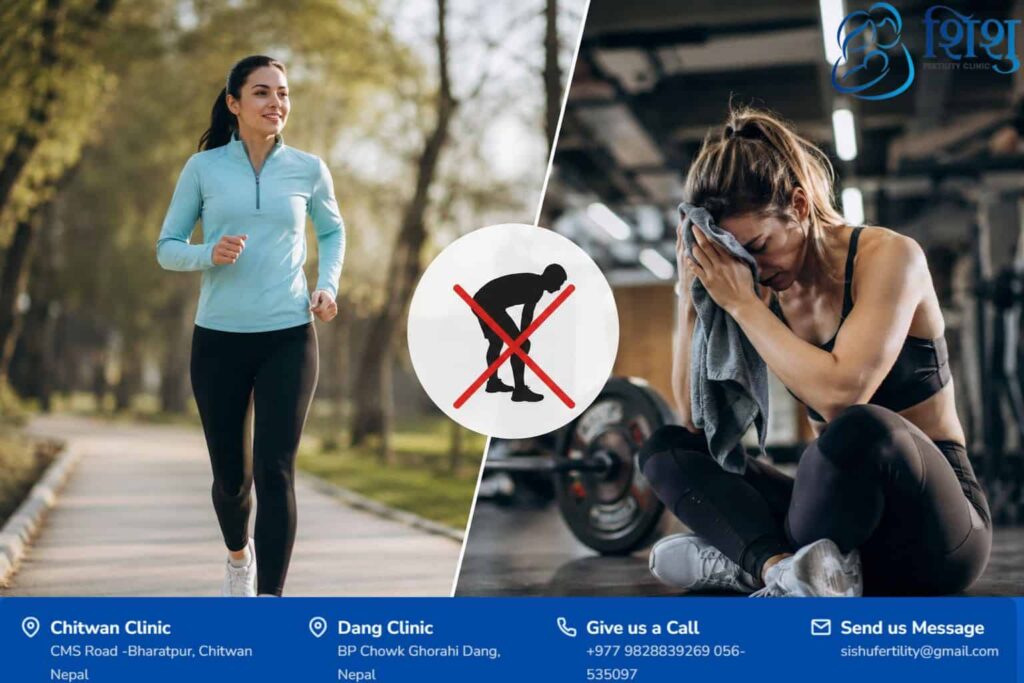
Moderate physical activity before and during IVF supports hormonal balance, reduces stress, and helps with weight management.
What is safe and helpful:
- Walking 30 minutes daily
- Yoga (gentle, not hot yoga)
- Light swimming
What to avoid during stimulation and the two-week wait:
- High-intensity interval training (HIIT)
- Heavy weightlifting
- Running long distances
- Any exercise that involves vigorous bouncing or twisting
During IVF stimulation, your ovaries become enlarged. Intense exercise during this time carries a small but real risk of ovarian torsion (the ovary twisting on itself), which is a medical emergency.
Keep moving. Just keep it gentle.
Tip 7: Take Your Medications Exactly as Prescribed
This sounds obvious. But it is one of the most common reasons IVF cycles are cancelled or produce poor results.
IVF medications are timed precisely. Missing a dose, taking it at the wrong time, or storing it incorrectly can affect follicle development, trigger timing, and embryo quality.
During your stimulation phase:
- Take injections at the same time each day, within a 1-hour window
- Store medications as instructed. Many fertility injections must be refrigerated
- Do not skip monitoring appointments. Your doctor adjusts your dose based on scan results
- Tell your doctor immediately if you feel significant bloating, pain, or nausea. These can be early signs of OHSS (ovarian hyperstimulation syndrome)
The stimulation phase is typically 10 to 14 days. Every dose matters.
Tip 8: Reduce Stress Actively, Not Passively
Stress does not simply make IVF feel harder. Research shows it has a biological effect on IVF outcomes.
High cortisol (the main stress hormone) can suppress the hormonal signals needed for follicle development and ovulation. A 2023 meta-analysis found that women who received structured psychological support during IVF had significantly better outcomes. One exploratory trial showed 4.47 times higher odds of pregnancy in the intervention group versus control.
Stress reduction during IVF is not about “relaxing more.” It is about having a plan.
What actually works:
- Counselling or cognitive behavioural therapy (CBT): Particularly effective before and during the two-week wait
- 10 to 20 minutes of daily mindfulness or breathing exercises: Lowers cortisol measurably
- Setting limits on IVF forums and social media: Reading other people’s results endlessly increases anxiety, not understanding
- Deciding in advance what you will and will not share with family and friends. Pressure from family is one of the most specific stressors for Nepali couples
In Nepal, where social pressure around having children is intense, and women are often held responsible for fertility problems regardless of the medical cause, managing external stress is a real clinical concern. It is not a soft suggestion.
Tip 9: Attend Every Monitoring Appointment During Stimulation
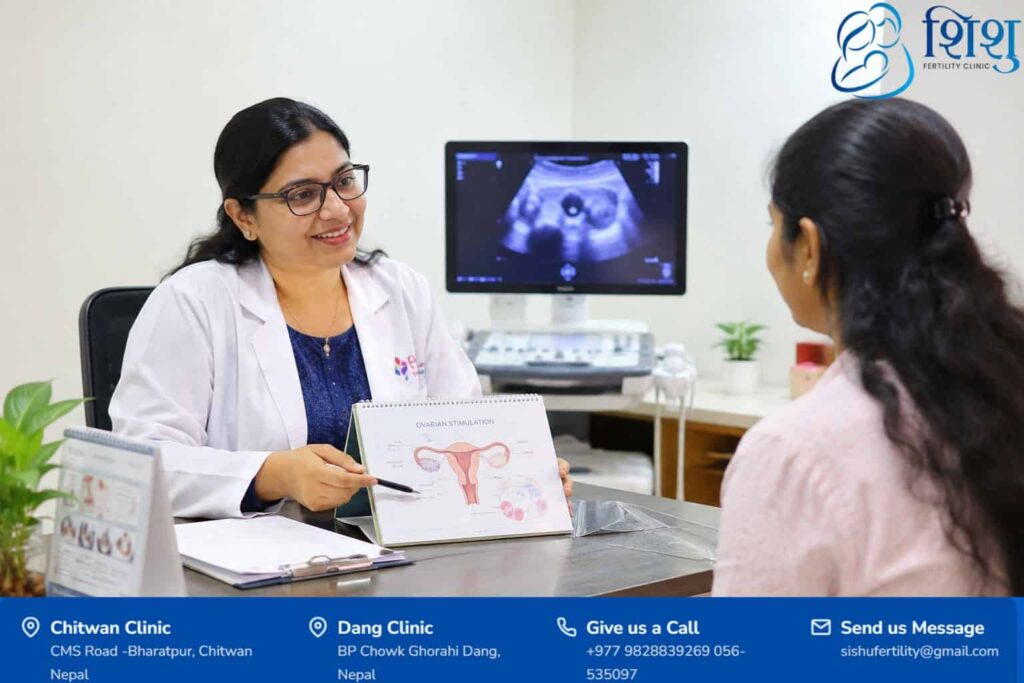
During IVF stimulation, your doctor uses transvaginal ultrasound scans to track follicle growth and blood tests to check hormone levels. Typical IVF patients have 4 to 6 monitoring appointments over 10 to 14 days.
Missing even one can mean:
- Your medication dose is not adjusted when it should be
- The trigger shot is given at the wrong time
- Egg retrieval is scheduled too early or too late
Every monitoring appointment is a real data point that shapes your treatment. Do not miss them.
If you are travelling from outside Chitwan or Dang for treatment at Sishu Fertility Clinic, plan your schedule around monitoring appointments before your cycle begins. Do not plan it after.
Tip 10: Understand What Good Embryo Quality Means and How the Lab Affects It
Many couples focus entirely on what they can control themselves and forget that the embryology lab determines a large part of IVF success.
A good embryo is one that:
- Reaches the blastocyst stage (Day 5), which is considered the strongest stage for transfer
- Has a clear, symmetrical cell structure when graded by the embryologist
- Has intact DNA (measured by sperm DNA fragmentation testing if applicable)
What to ask your clinic about the lab:
- What is your fertilisation rate? (Aim for above 65 to 70%)
- What percentage of fertilised eggs reach blastocyst by Day 5? (Aim for 40 to 50%)
- Is your lab on-site, or are samples sent elsewhere?
A frozen embryo transfer (FET) is a process where embryos are frozen and transferred in a separate cycle. This approach now shows live birth rates of 52% for women under 35, often higher than fresh transfers, because the uterus has fully recovered from stimulation before the embryo is placed.
Ask your doctor whether a freeze-all strategy is right for your situation.
What the Research Says About IVF Success Rates in Nepal by Age
No matter what lifestyle steps you take, age remains the strongest single predictor of IVF success. Here is a realistic picture based on current data:
| Woman’s Age | Approximate Live Birth Rate Per Cycle (Own Eggs) |
| Under 35 | 40% to 50% |
| 35 to 37 | 35% to 40% |
| 38 to 40 | 25% to 35% |
| Over 40 | 15% to 25% |
| Over 42 | Below 10% |
These figures are consistent with published data from Sishu Fertility Clinic, which is a trusted IVF Clinic in Nepal, and global benchmarks. If you are over 35, this is not a reason to give up. It is a reason to start sooner, not later. Every 6 months matters significantly once you are past 37.
A Checklist: What to Do Before Your IVF Cycle Starts
Use this in the 2 to 3 months before your stimulation begins:
Both partners:
- Stop smoking completely
- Reduce alcohol to zero or as close as possible
- Start folic acid supplementation (women) and antioxidants (men)
- Reach a healthy BMI through gradual diet and exercise changes
- Avoid saunas, hot baths, and tight underwear (men only, because scrotal heat kills sperm)
- Discuss all supplements and medications with your doctor
- Attend your baseline assessment appointment
Women specifically:
- Shift toward a Mediterranean-style diet using local Nepal foods
- Start gentle daily exercise (walking, yoga)
- Set up a stress management plan through counselling, mindfulness, or a trusted support person
- Plan your monitoring appointment schedule before stimulation begins
- Get Vitamin D levels tested
Men specifically:
- Get a full semen analysis including sperm DNA fragmentation
- Stop anabolic steroids or testosterone supplements if using them (discuss with doctor first)
- Reduce or eliminate alcohol
- Switch to loose-fitting underwear
Get Your IVF Assessment at Sishu Fertility Clinic
Sishu Fertility Clinic and IVF Center is one of the trusted IVF Center in Nepal that is located in Chitwan (CMS Road, Bharatpur) and Dang (BP Chowk, Ghorahi). Our fertility specialists work with both partners from the very first appointment. Not just the woman. IVF outcomes depend on both partners equally.
Before your cycle begins, we assess:
- Ovarian reserve (AMH, antral follicle count)
- Uterine health (transvaginal ultrasound)
- Full semen analysis for your partner
- Hormone panel for both partners
- Any underlying conditions like PCOS, endometriosis, or male factor infertility
From that assessment, we build a treatment plan specific to your situation. Not a standard protocol applied to everyone. That is what personalized IVF care actually means.
To understand the full IVF process at Sishu, visit our IVF Treatment page.
For a complete breakdown of IVF costs in Nepal, visit our IVF Cost in Nepal page.
If you are ready to take the next step, book a consultation at our Chitwan or Dang clinic today.
Common Questions People Ask To Improve Their IVF Success
How long before IVF should I start making lifestyle changes?
Start at least 2 to 3 months before your stimulation cycle begins. Eggs take approximately 3 months to mature, and sperm takes about 2.5 months to develop. Changes made in this window directly affect the quality of eggs and sperm used in your treatment.
Does stress really affect IVF success?
Yes. High cortisol levels from chronic stress can suppress the hormonal signals needed for follicle development. Research also shows that women who receive structured psychological support during IVF have measurably better outcomes. Managing stress is not optional. It is part of treatment.
Can my partner improve sperm quality before IVF?
Yes. Stopping smoking, reducing alcohol, taking antioxidant supplements (zinc, selenium, Vitamin C and E), avoiding heat exposure to the testes, and stopping any anabolic steroid use can all improve sperm parameters within 2 to 3 months.
Is the Mediterranean diet really proven for IVF?
The evidence is strong, though not yet definitive. A meta-analysis of 13 studies covering 3,638 IVF patients found nearly twice the live birth rate in women who followed Mediterranean dietary patterns. Individual studies in women under 35 found up to 2.7 times higher likelihood of clinical pregnancy. The evidence is consistent enough to act on.
Should I do acupuncture during IVF?
The evidence is mixed but improving. A 2023 meta-analysis found that women who received acupuncture around embryo transfer had approximately a 19% higher rate of clinical pregnancy. It is not a guaranteed boost, but the risk is low and some benefit is plausible. Always tell your fertility doctor if you are receiving any complementary therapy.
What should I do differently during the two-week wait?
Continue taking your prescribed progesterone support medications exactly as instructed. Avoid intense exercise, heavy lifting, and alcohol. Eat normally. You do not need to lie still or restrict your activities significantly. Normal, gentle daily life is fine. Avoid obsessive symptom checking. The two-week wait is best managed with a plan: something absorbing to do each day, a support person to talk to, and a decision about when you will take the pregnancy test.
Does frozen embryo transfer give better results than fresh transfer?
For many patients, yes. Frozen embryo transfer (FET) shows live birth rates of 52% for women under 35, often higher than fresh transfer, because the uterus has time to recover from stimulation before the embryo is placed. Ask your doctor at Sishu whether a freeze-all strategy is appropriate for your situation.