
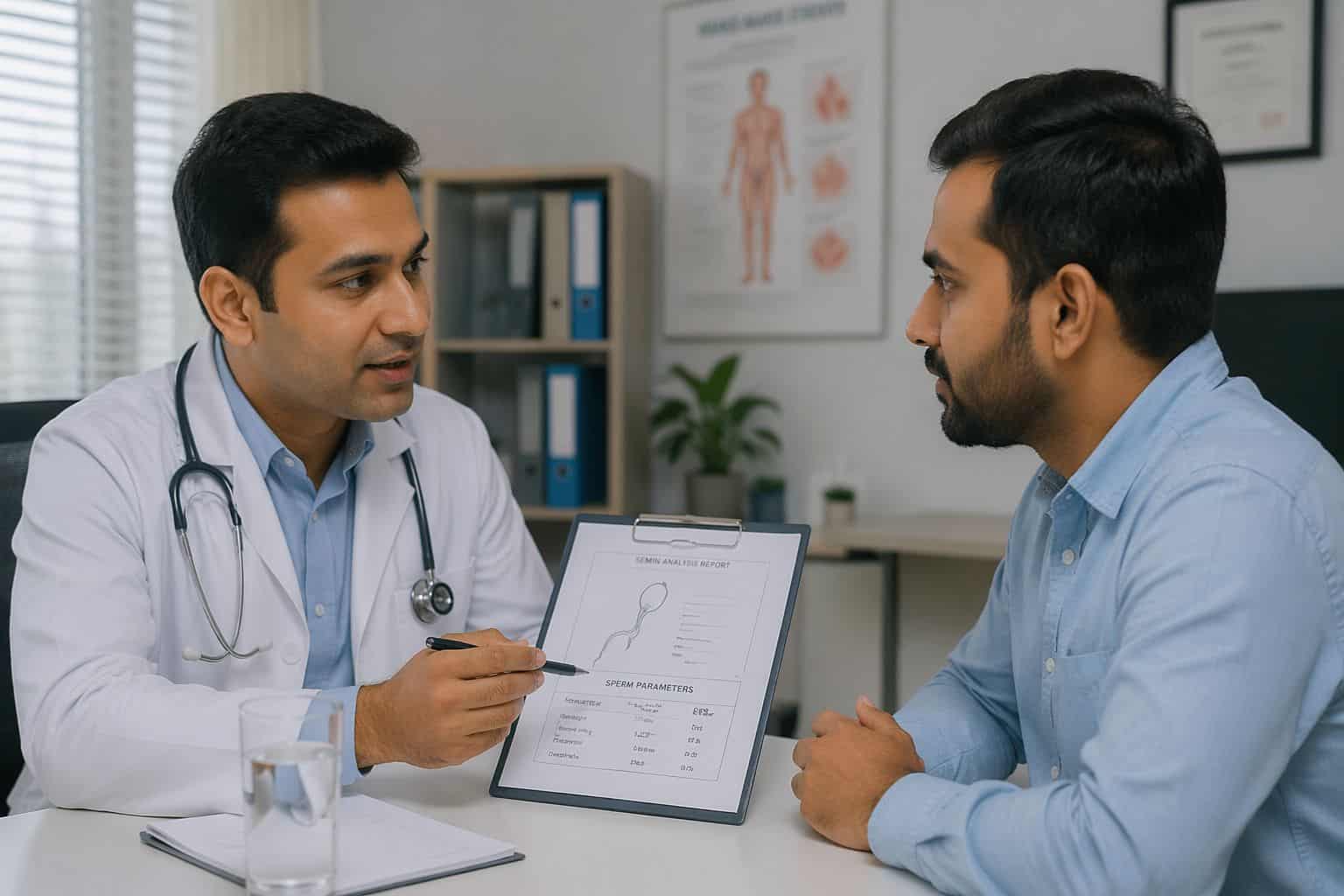
A Semen analysis (Sperm analysis) in Nepal costs between NPR 1,500 and NPR 5,000 for a standard test, depending on the clinic, city, and the parameters included. Comprehensive tests that add sperm DNA fragmentation or antisperm antibody testing can cost more. The test is the single most important first step in evaluating male fertility. In Nepal, it is widely available at fertility clinics and diagnostic laboratories in Kathmandu, Chitwan, Pokhara, and other major cities.
This guide covers what the test measures, exactly what the numbers mean, how to prepare, what a realistic cost looks like across different clinic types in Nepal, and what to do when results come back abnormal.
Who Should Get a Sperm Analysis Test in Nepal?
Before getting into costs and procedures, it is worth being clear about who actually needs this test, because many Nepali men delay it far longer than they should.
You should get a sperm analysis if your partner has not become pregnant after 12 months of regular unprotected intercourse, or after 6 months if your partner is over 35. You should also consider it if there is a known medical history that might affect sperm production, including varicocele, undescended testes, previous genital or groin surgery, testicular injury or infection, hormonal conditions, chemotherapy, or long-term use of certain medications such as anabolic steroids or testosterone therapy.
Men who have recently had a vasectomy also need a sperm analysis, typically 6 to 8 weeks after the procedure, to confirm that the operation was successful and no sperm remain in the ejaculate.
In Nepal, male factors contribute to infertility in roughly 40 to 50% of cases among couples who cannot conceive, a figure consistent with global reviews of male factor infertility published in PMC. Yet the semen analysis is often the last test ordered rather than the first, partly because of the cultural reluctance among Nepali men to consider that the problem might involve them. This delay costs couples months or years of treatment aimed at the wrong partner. A sperm analysis is simple, non-invasive, affordable, and should be done at the very beginning of any fertility investigation, alongside the female partner’s initial assessment.
What Is Sperm Analysis? What Does It Actually Test?
A sperm analysis, sometimes called a semen analysis or seminogram, is a laboratory examination of a semen sample under a microscope. It evaluates both the fluid (semen) and the cells it contains (sperm) across several parameters.
The standard parameters assessed in a basic sperm analysis in Nepal are as follows. All reference values below are drawn from the WHO 6th Edition Laboratory Manual for Human Semen Analysis (2021), the current global clinical standard used by accredited fertility laboratories worldwide.
Volume is the total amount of semen produced in a single ejaculation. The WHO 6th edition (2021) reference value is 1.4 mL or more. A very low volume can suggest problems with the seminal vesicles or ejaculatory ducts.
Sperm concentration is the number of sperm per millilitre of semen. The WHO 2021 reference value is 16 million per mL or more. This was updated from the 2010 threshold of 15 million per mL. Low concentration is called oligospermia.
Total sperm count is the concentration multiplied by the volume. This gives the total number of sperm in the entire ejaculate.
Motility measures the percentage of sperm that are moving. The WHO 2021 reference is 42% or more showing total motility. Within this, progressive motility (sperm swimming forward in a straight or large curve) is the most clinically relevant measure, with a reference value of 30% or more. Poor motility is called asthenospermia.
Morphology assesses the percentage of sperm with a normal shape. Using strict (Kruger) criteria, the WHO 2021 reference value is 4% or more with normal forms. Abnormal morphology is called teratospermia. Even a result of 4% sounds alarming, but it reflects how strict the criteria are, not that most sperm are defective.
pH measures acidity or alkalinity of the semen. Normal range is 7.2 or above. An abnormally low pH alongside low volume can point to blocked ejaculatory ducts or absence of the seminal vesicles.
Liquefaction time is how long it takes for the semen to change from a gel-like state to a liquid. Normal liquefaction occurs within 15 to 30 minutes. Delayed liquefaction can impair sperm movement.
Vitality (live sperm percentage) is sometimes added as a separate step. It is typically assessed when total motility falls below 40%, to distinguish between dead sperm and live immotile sperm. The WHO 2021 reference is 54% or more live sperm.
White blood cells are also counted. More than 1 million white blood cells per mL can indicate a genital tract infection that may be affecting sperm function.
Advanced Tests Beyond the Standard Panel
A basic sperm analysis tells you about quantity and movement. It does not tell you whether the sperm DNA is intact. This matters because men can have normal count, motility, and morphology on a standard analysis but still have high DNA fragmentation, which can cause fertilization failure, early miscarriage, or poor embryo quality in IVF.
Sperm DNA fragmentation (DFI) testing is available at specialist fertility clinics in Nepal. A review of the WHO 6th Edition semen analysis updates published in PMC highlights sperm DNA fragmentation as an emerging parameter of clinical importance, with a DFI above 25 to 30% associated with significantly reduced natural conception rates and lower IVF and ICSI success. This test is particularly relevant for couples with unexplained infertility, recurrent miscarriage, or after multiple failed IVF cycles.
Antisperm antibody (ASA) testing checks whether the immune system is producing antibodies that attack sperm, which can affect motility and the ability of sperm to penetrate an egg. It is recommended when the basic analysis shows significant clumping of sperm.
Semen Analysis Cost in Nepal (2026)
The cost of a Semen analysis in Nepal depends on three things: the type of facility, the city, and the parameters included.
| Test Type | Typical Cost Range (NPR) |
|---|---|
| Basic semen analysis (count, motility, morphology, volume) | 1,500 to 3,000 |
| Comprehensive semen analysis (including vitality, pH, WBC, liquefaction) | 2,500 to 5,000 |
| Sperm DNA fragmentation test | 8,000 to 15,000 |
| Antisperm antibody test | 3,000 to 6,000 |
| Full male fertility panel (semen analysis + hormones + DNA fragmentation) | 15,000 to 30,000 |
These figures represent current market rates across clinics in Nepal as of 2026. They are not guarantees. Prices vary by clinic and should always be confirmed directly when booking.
Kathmandu has the widest range of facilities. Fertility specialist clinics typically charge NPR 2,500 to NPR 5,000 for a comprehensive analysis. General diagnostic laboratories offer basic tests from NPR 1,500 to NPR 2,500.
Chitwan (Bharatpur) offers competitive pricing at fertility clinics, generally between NPR 1,500 and NPR 3,500, with some clinics offering package pricing when the test is part of an initial fertility assessment.
Pokhara and other cities have increasing access to basic semen analysis, typically at similar or slightly lower price points than Kathmandu.
The cost of the test itself is only one consideration. A sperm analysis result needs to be interpreted by a doctor with fertility experience who can tell you what the numbers mean for your specific situation and whether additional investigation is warranted. Getting a cheap test at a general lab without clinical interpretation attached is often a false economy.
How to Prepare for a Semen Analysis in Nepal

Preparation matters significantly. Poor preparation is one of the most common reasons for misleading results.
Abstinence period: Do not ejaculate for 2 to 5 days before giving your sample. Fewer than 2 days means sperm count will be artificially low. More than 7 days can reduce motility. The 2 to 5 day window is the established standard and is worth following carefully.
Avoid alcohol, tobacco, and recreational drugs for at least 48 hours before the test. Alcohol affects sperm motility. Tobacco causes DNA damage over time and also affects the day’s sample.
Avoid hot baths, saunas, and tight underwear for 48 hours before the test. Elevated scrotal temperature reduces sperm production and affects motility readings.
Inform your doctor of any medications you are taking, including supplements, before the test. Some medications including testosterone, steroids, and certain antibiotics affect sperm parameters.
Do not use lubricants during sample collection. Most commercial lubricants, including saliva, are toxic to sperm and will produce a falsely low motility result. The clinic will provide sterile collection materials.
Provide the sample at or near the clinic. The sample must reach the laboratory within 30 to 60 minutes of collection and must be kept at body temperature during transport. Many Nepali men collect at home and transport the sample, which is acceptable if the journey is short and the container is kept warm (inside a shirt pocket or close to the body). If the journey is longer, collect at the clinic.
Tell the clinic if you were recently unwell. A fever within the past 3 months can temporarily suppress sperm count. Results from during or shortly after a significant illness may not represent your baseline. Wait for recovery before testing if possible, or repeat the test 2 to 3 months later.
The Test Procedure: What Happens at the Clinic
There is no invasive procedure in a sperm analysis. You will be given a private room or space in the clinic, a sterile collection container, and instructions. You produce the semen sample by masturbation directly into the container. The container should be sealed, labelled, and handed to the laboratory staff within the time window they specify.
The laboratory then allows the sample to liquefy at 37 degrees Celsius for 15 to 30 minutes before analysis begins. A trained technician examines it under a microscope using a counting chamber to assess concentration, then evaluates motility in real time, and morphology from a stained slide.
Results in most Nepali fertility clinics are available within the same day or the following working day. You should receive a printed report that lists each parameter alongside the WHO reference range.
How to Read Your Sperm Analysis Report
When you receive your results, you will see each parameter listed alongside a reference value. Here is how to understand what you are reading.
The WHO 2021 6th edition reference values are the current clinical standard used by most accredited fertility laboratories. A result below the lower reference limit for one or more parameters does not automatically mean you cannot father a child naturally. These are statistical thresholds derived from fertile men, not hard binary cutoffs. Many men with results slightly below the reference values for concentration or motility still conceive naturally.
What matters clinically is the combination of all parameters together. A man with low concentration but excellent progressive motility is in a very different clinical position from a man with low concentration and poor motility combined. Total motile count (TMC), which multiplies volume by concentration by the percentage of progressively motile sperm, is often considered the single most useful combined predictor of fertility potential.
| TMC Range | Typical Clinical Significance |
|---|---|
| Above 20 million | Normal; natural conception likely possible |
| 5 to 20 million | Reduced; IUI may be considered |
| 1 to 5 million | Significantly reduced; IVF or ICSI typically needed |
| Below 1 million | Severe; ICSI is usually required |
These figures are guides for clinical discussion, not absolute rules. Your doctor at Sishu Fertility Clinic will interpret your specific results in the context of your age, health history, and your partner’s fertility assessment before making any treatment recommendation.
What Happens If Your Results Are Abnormal?
An abnormal sperm analysis result is not a diagnosis of permanent infertility. It is the beginning of an investigation into why the parameters are what they are, and whether the cause is treatable.
A single abnormal result should always be repeated. Sperm production fluctuates due to illness, stress, heat exposure, alcohol use, and timing. Two results, taken 4 to 12 weeks apart with correct preparation, give a much more reliable picture than one.
Azoospermia (no sperm found in the ejaculate) requires further investigation to determine whether it is obstructive (a blockage preventing sperm from reaching the ejaculate, but sperm are still being produced) or non-obstructive (the testes are not producing sperm). This distinction determines whether surgical sperm retrieval (TESA or TESE) may be possible.
Oligospermia (low sperm count) may be caused by varicocele, hormonal imbalance, testicular damage, infection, genetic conditions, or lifestyle factors. Treatment depends on the cause. Varicocele repair, hormonal treatment, or lifestyle changes can improve parameters in some men.
Asthenospermia (poor motility) can result from infection, antisperm antibodies, oxidative stress, or structural sperm defects. Antioxidant supplementation is sometimes recommended, though the evidence for specific supplements is mixed and a doctor should guide this decision.
Teratospermia (poor morphology) is the most common abnormality found on sperm analysis. Isolated teratospermia rarely prevents conception entirely, but severe teratospermia combined with other parameter abnormalities may warrant ICSI.
Depending on what the sperm analysis shows, your fertility doctor may recommend hormone blood tests (FSH, LH, testosterone, prolactin), a scrotal ultrasound to check for varicocele, genetic testing (karyotype or Y-chromosome microdeletion analysis), or sperm DNA fragmentation testing. These investigations together build a complete picture of male fertility rather than relying on any single result.
Semen Analysis at Sishu Fertility Clinic
Sishu Fertility Clinic and IVF Center, with locations in Chitwan (CMS Road, Bharatpur) and Dang (BP Chowk, Ghorahi), offers comprehensive sperm analysis as part of both initial fertility assessments and ongoing IVF workup.
At Sishu, the semen analysis is done in a proper andrology laboratory with trained technicians, using WHO 2021 standards. Results are interpreted directly by our fertility specialists and not simply handed over as a printed number sheet. We look at the complete picture: your semen parameters together with your partner’s assessment, your medical and lifestyle history, and your treatment goals. From there, we give you a clear explanation of what the results mean and what the most appropriate next step looks like for your specific situation.
If the initial result is abnormal, we guide you through which additional investigations are relevant rather than ordering every possible test. If lifestyle factors are likely contributing, we discuss those specifically and give you a realistic timeframe for retesting.
To get your sperm analysis done at Sishu Fertility Clinic or to speak with a fertility specialist about your results, book a consultation at our Chitwan or Dang location. For more on how male factor infertility is assessed and treated as part of our IVF programme, visit our Male Infertility page.
FAQs About Semen Analysis in Nepal
How much does a Semen test cost in Nepal?
A basic semen analysis in Nepal costs between NPR 1,500 and NPR 3,000 at most diagnostic labs and fertility clinics. A comprehensive analysis including vitality, pH, white blood cell count, and liquefaction time typically costs NPR 2,500 to NPR 5,000. Advanced tests such as sperm DNA fragmentation run higher, generally NPR 8,000 to NPR 15,000.
Where can I get a sperm test done in Nepal?
Sperm analysis is available at fertility clinics, andrology laboratories, and major hospitals across Nepal. Kathmandu has the most facilities. In Chitwan, Sishu Fertility Clinic (CMS Road, Bharatpur) offers comprehensive semen analysis with clinical interpretation as part of a fertility assessment.
How many days of abstinence do I need before a sperm test?
Two to five days. Fewer than two days gives an artificially low sperm count. More than seven days can reduce motility. Sticking to this window gives the most accurate and reproducible result.
Can I collect the sample at home?
Yes, if the clinic approves and you can deliver it within 30 to 60 minutes, kept at body temperature. Collecting at the clinic is more reliable because the sample reaches the laboratory immediately without temperature or time variation.
Does one abnormal sperm test mean I am infertile?
No. Sperm parameters fluctuate. A single abnormal result should always be repeated 4 to 12 weeks later after correct preparation. Many men with an initially abnormal result find their second test is significantly different. Only a pattern across two or more tests gives a reliable clinical picture.
My sperm count is low. Can it improve?
In many cases, yes. If a lifestyle factor such as obesity, smoking, alcohol use, heat exposure, or anabolic steroid use is contributing, addressing it can improve parameters meaningfully over two to three months (the time it takes for a full cycle of sperm production). If the cause is structural, such as varicocele, surgical correction can improve parameters in many men. Your doctor will advise based on your specific situation.
Is a sperm test confidential?
Yes. All medical testing and results in Nepal are subject to patient confidentiality. At Sishu Fertility Clinic, your results are shared only with you and discussed privately with your treating doctor.
What is the difference between a sperm analysis and a sperm DNA fragmentation test?
A standard sperm analysis measures quantity (count, volume), movement (motility), and shape (morphology). It does not evaluate whether the genetic material inside the sperm is intact. Sperm DNA fragmentation testing specifically measures the percentage of sperm with damaged DNA. It is a separate, more advanced test recommended when basic analysis results are unexpectedly normal despite fertility problems, or after recurrent miscarriage.
Is a sperm test covered by insurance in Nepal?
Most health insurance plans in Nepal do not cover fertility-related diagnostic tests including semen analysis. Coverage depends on your specific plan. It is worth checking with your insurer before booking, but most couples pay for this test out of pocket.
To book a sperm analysis or full male fertility assessment at Sishu Fertility Clinic, visit our Book an Appointment page. To understand how sperm results fit into your IVF treatment plan, read about our IVF Treatment services in Nepal.