
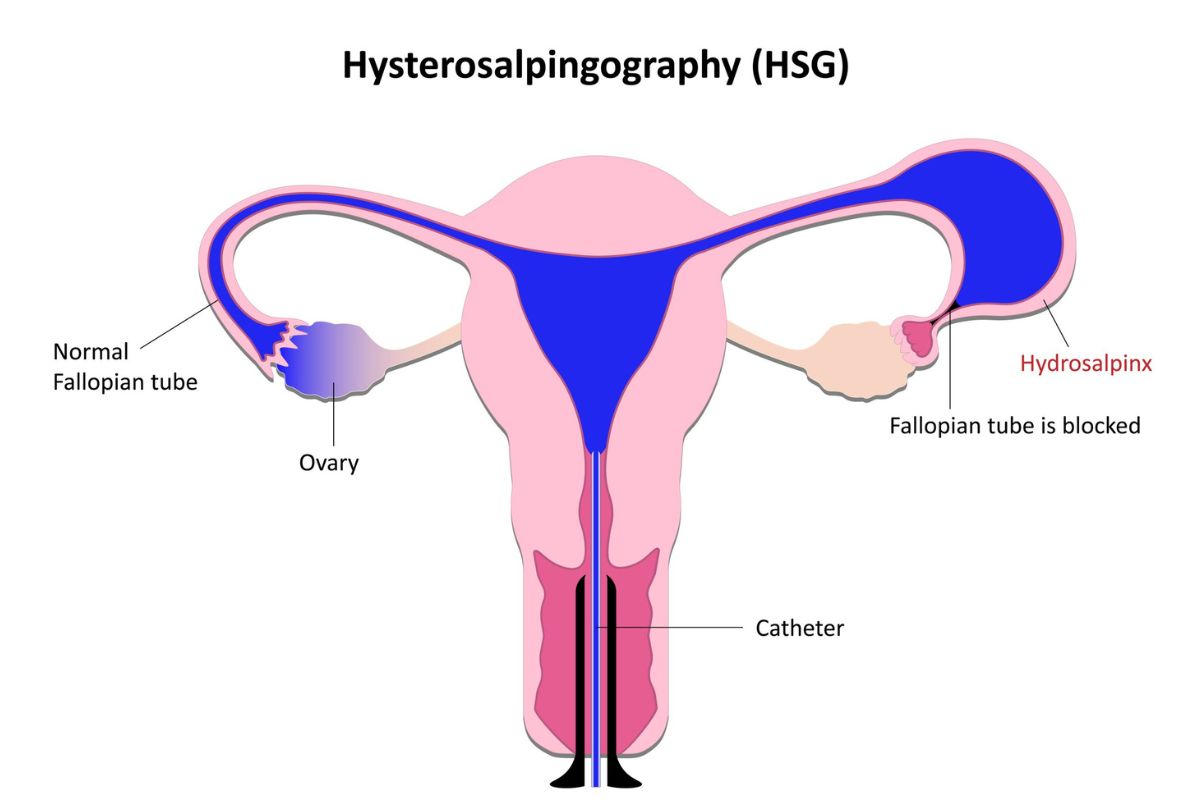
An HSG (hysterosalpingography) is a short X-ray test that checks whether your fallopian tubes are open and whether your uterus has a normal shape. It takes about 15–30 minutes, is done a few days after your period ends, and most women feel period-like cramps for a few minutes.
If you have been trying to conceive for a year without success (or six months if you are over 35), an HSG test is one of the first tests a fertility doctor will suggest. Blocked or damaged fallopian tubes are a common cause of female infertility, and you cannot feel them. The HSG test in Nepal is widely available, quick, and gives your doctor information that guides the next step, whether that is timed intercourse, IUI or IVF treatment.
Table of Contents
What is an HSG test?
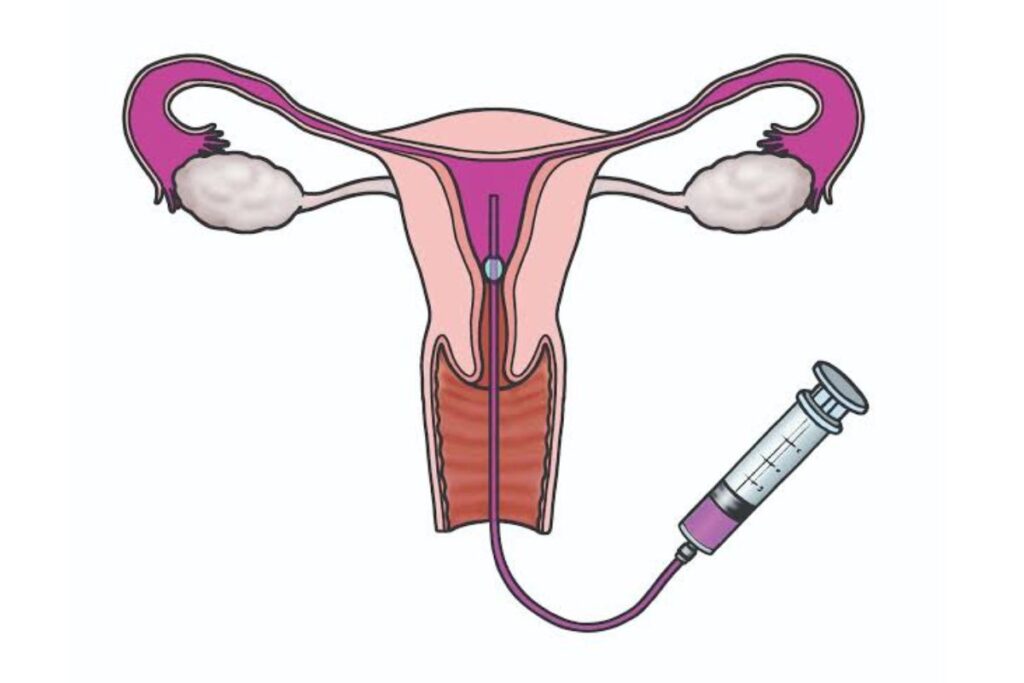
HSG stands for hysterosalpingography. “Hystero” means uterus and “salpingo” means fallopian tube. A doctor places a thin tube through the cervix and slowly fills the uterus with a special dye (contrast) that shows up on X-ray. As the dye flows, a few X-ray pictures are taken.
If the tubes are open, the dye passes through them and spills out into the abdomen, where the body absorbs it harmlessly. If a tube is blocked, the dye stops at the blockage, and the X-ray shows exactly where.
Why do doctors recommend an HSG test?
An HSG test answers two questions at once: are the tubes open, and is the inside of the uterus normal? Your doctor may recommend it if:
- You have not conceived after 12 months of regular, unprotected intercourse (6 months if you are 35 or older).
- You have had a pelvic infection, pelvic inflammatory disease (PID), tuberculosis or an ectopic pregnancy before.
- You have had abdominal or pelvic surgery, such as a caesarean section or appendix surgery.
- You have had repeated miscarriages and your doctor wants to check the shape of the uterus.
- You are planning IUI, which only works if at least one tube is open.
- You had a tubal ligation reversed and want to confirm the tubes are open.
Read more about the causes of tubal problems in our guide to blocked fallopian tubes.
When in my cycle should I have an HSG?
The test is usually booked between day 6 and day 11 of your cycle (day 1 is the first day of your period). This timing matters for two reasons: your period has stopped, so blood does not block the view, and you have not ovulated yet, so there is no chance you are already pregnant.
Call the clinic on the first day of your period so the team can book your slot. Avoid unprotected sex from the start of your period until the test, unless your doctor tells you otherwise.
How is the HSG procedure done? (Step by step)
- Before the test: the team checks your history, may confirm you are not pregnant, and asks about allergies (especially to iodine or contrast dye). Your doctor may suggest a painkiller 30–60 minutes before.
- Positioning: you lie on your back on the X-ray table with your knees bent, like a routine pelvic examination.
- Speculum and catheter: a speculum is placed in the vagina, the cervix is cleaned, and a thin soft tube (catheter) is placed in the cervix.
- Dye and X-ray: dye is slowly injected while X-ray images are taken. You may be asked to turn slightly to one side. This part lasts only a few minutes.
- Finish: the instruments are removed and you rest for a few minutes before going home.
The whole visit usually takes 15–30 minutes. Most women drive or travel home the same day.
Is an HSG test painful?
Most women describe the HSG test as uncomfortable rather than very painful. The common feeling is cramping like a strong period pain, mainly while the dye fills the uterus and tubes. It usually settles within 5–15 minutes after the test.
Cramping can be stronger if a tube is blocked, because the dye builds up pressure behind the blockage. Things that help:
- Taking the painkiller your doctor recommends before the test.
- Breathing slowly and keeping your stomach and pelvic muscles relaxed.
- Telling the doctor if the pain is strong; they can slow the dye down.
- Bringing someone with you for the journey home.
Worried about other tests too? See is a transvaginal ultrasound painful?
How do I book an HSG test?
Call or WhatsApp the clinic on the first day of your period. The team will book a slot between day 6 and day 11 of your cycle and tell you how to prepare. Ask what the visit includes, such as the doctor’s review of the images and the written report, so you know what to expect.
What do HSG results mean?
Your doctor usually sees the images during the test and can explain the main result the same day. The written report follows.
| Result | What it means | Likely next step |
|---|---|---|
| Both tubes open, uterus normal | Dye spills freely from both tubes | Timed intercourse, ovulation induction or IUI, based on other tests |
| One tube open | Pregnancy is still possible naturally or with IUI | IUI timed to ovulation on the open side, or IVF if other factors exist |
| Both tubes blocked | The egg and sperm cannot meet in the tube | IVF, which bypasses the tubes; sometimes surgery |
| Hydrosalpinx (swollen, fluid-filled tube) | Fluid can lower IVF success | Laparoscopy to remove or clip the tube before IVF |
| Abnormal uterine shape, polyp, fibroid or adhesions | Can affect implantation or cause miscarriage | Hysteroscopy to confirm and treat |
A tube can sometimes look blocked near the uterus because the tube muscle cramps (spasm) during the test. If this is suspected, your doctor may repeat the test or confirm it with laparoscopy before deciding on treatment.

Can an HSG test improve my chances of getting pregnant?
Some couples conceive in the few months after an HSG. Researchers think the dye may flush out mucus or debris from the tubes. A large trial published in the New England Journal of Medicine in 2017 found higher pregnancy rates in the six months after HSG when oil-based dye was used instead of water-based dye. The HSG is still a diagnostic test, not a treatment, so do not delay further care if you do not conceive.
Is the HSG test safe? Risks and side effects
HSG is a routine and safe test. Possible side effects are usually mild:
- Cramping and light spotting for a day or two, and a sticky discharge as the dye leaves the body.
- Infection is uncommon. It is more likely if you have had pelvic infections before; your doctor may give antibiotics.
- Allergic reaction to the dye is rare. Tell the team about any iodine or contrast allergy.
- Feeling faint during or soon after the test can happen; lie down until it passes.
- Radiation exposure is low and limited to a few images.
Do not have an HSG if you might be pregnant, have an active pelvic infection, or have heavy bleeding on the day. Contact the clinic urgently if you have fever, severe or worsening pain, heavy bleeding or a bad-smelling discharge after the test. RadiologyInfo explains the X-ray side of the test in more detail in its hysterosalpingography patient guide.
HSG vs other tests for the fallopian tubes
| Test | How it works | Best for |
|---|---|---|
| HSG | X-ray with dye through the cervix | First-line check of tubes and uterus; quick, no anaesthesia |
| Saline sonography / HyCoSy | Ultrasound with saline or foam | No X-ray; good view of the uterus lining |
| Laparoscopy with dye test | Keyhole surgery under anaesthesia | Most accurate; can treat endometriosis or adhesions at the same time |
Where can I get an HSG test in Nepal?
Sishu IVF arranges HSG tests and reviews the results with you at our branches in Bharatpur, Chitwan, Butwal and Ghorahi, Dang. Your fertility doctor will look at the HSG together with your hormone tests, ultrasound and your partner’s semen analysis, so you get one clear plan instead of separate reports.
Frequently asked questions
How long does an HSG test take?
The X-ray part takes about 5 minutes, and the whole visit usually takes 15–30 minutes.
Can I go to work after an HSG test?
Most women return to normal activities the same day. Some prefer to rest for the afternoon if cramps continue.
Do I need anaesthesia for an HSG?
No. A painkiller before the test is usually enough. Tell your doctor if you are very anxious about pain.
When can I try to conceive after an HSG?
Most doctors say you can try in the same cycle, after any spotting stops. Follow the advice your doctor gives you after seeing the result.
Does my husband need to come for the HSG test?
He does not need to be in the room, but it helps to have someone with you. His semen analysis is equally important, so it is a good time to book it.
Book your HSG test at Sishu IVF
Call us on the first day of your period to book your HSG test at the branch nearest to you.
📞 Call: +977 9828839269 · 💬 WhatsApp: +977 9828839269 · Book an appointment online