

A low sperm count (oligospermia) means fewer than 16 million sperm per millilitre of semen, or fewer than 39 million in the whole sample, based on WHO reference values. Many men with a low count can still become fathers. Treatment depends on the cause and ranges from lifestyle changes and medicine to varicocele surgery, IUI or IVF with ICSI.
Male factor problems are involved in a large share of couples who struggle to conceive, yet in Nepal the woman is often tested first and the man last. A simple semen test can show a low sperm count in a single visit. The good news is that a low count is a starting point for treatment, not a final answer. This guide explains what the numbers mean, what causes a low count, which tests come next and which male infertility treatment options are available in Nepal.
Table of Contents
What is a normal sperm count?
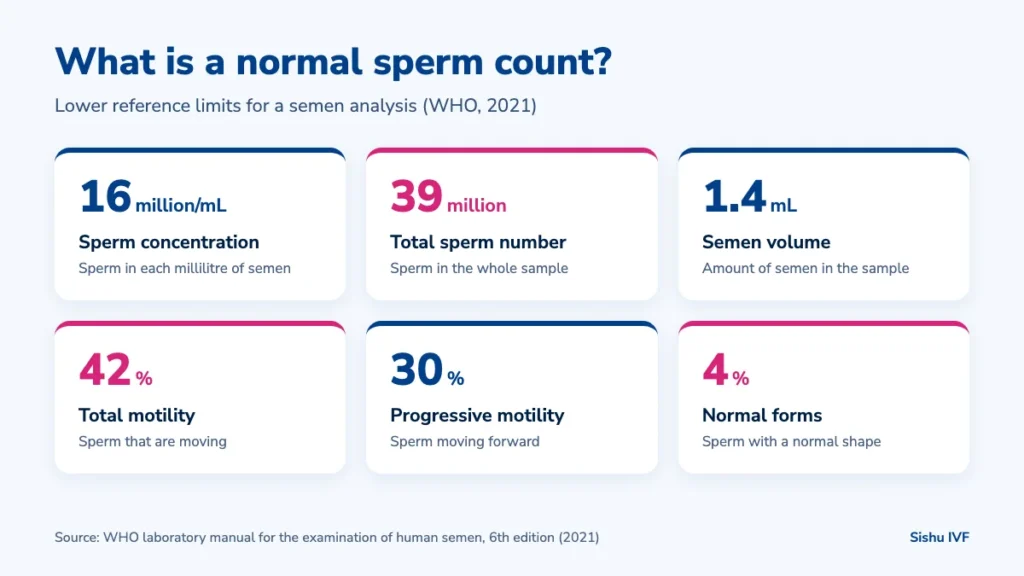
The World Health Organization publishes reference values for semen analysis. Results below these lower limits suggest reduced fertility, but they are not a strict pass or fail. Many men with values slightly below them still father children naturally.
| Semen parameter | WHO lower reference limit (2021) |
|---|---|
| Semen volume | 1.4 mL |
| Sperm concentration | 16 million per mL |
| Total sperm number | 39 million per ejaculate |
| Total motility (moving sperm) | 42% |
| Progressive motility (moving forward) | 30% |
| Normal forms (morphology) | 4% |
| Vitality (live sperm) | 54% |
Source: WHO laboratory manual for the examination and processing of human semen, 6th edition. For a full guide to reading your report, see our article on semen analysis in Nepal.
How low is “low”? Types of oligospermia
Doctors often group a low count by how far below normal it is. The exact cut-offs vary slightly between clinics.
| Type | Sperm concentration | Usual first options |
|---|---|---|
| Mild oligospermia | About 10–15 million/mL | Lifestyle changes, treat the cause, timed intercourse or IUI |
| Moderate oligospermia | About 5–10 million/mL | Treat the cause; IUI if enough moving sperm after washing; otherwise IVF/ICSI |
| Severe oligospermia | Below 5 million/mL | IVF with ICSI; genetic and hormone tests first |
| Cryptozoospermia | Very few sperm, found only after spinning the sample | ICSI using the sperm found |
| Azoospermia | No sperm in the sample | Specialist work-up; surgical sperm retrieval with ICSI |
What are the symptoms of a low sperm count?
Most men have no symptoms. The main sign is that their partner has not become pregnant after a year of trying. Less often, the cause shows itself through:
- Pain, swelling or a lump in the scrotum (for example, a varicocele that feels like a “bag of worms”).
- Low sex drive or difficulty with erections.
- Reduced facial or body hair, or breast swelling, which can point to a hormone problem.
- Very small volume of semen, or cloudy urine after sex.
What causes a low sperm count?
Sperm take about two and a half to three months to develop, so anything that affects the testes during that time can lower the count. Common causes include:
- Varicocele: swollen veins in the scrotum that overheat the testes. It is one of the most common causes that can be corrected.
- Infections: past mumps affecting the testes, sexually transmitted infections, prostate or epididymis infections, and tuberculosis.
- Hormone problems: low FSH or LH from the pituitary gland, high prolactin, or thyroid disease.
- Testosterone or steroid use: testosterone injections and bodybuilding steroids can shut down sperm production, sometimes for months.
- Genetic conditions: such as Klinefelter syndrome or small missing pieces of the Y chromosome, more likely when the count is severely low.
- Undescended testes in childhood, or past injury or surgery to the groin or testes.
- Heat: long hours sitting (for example, long-distance drivers), laptops on the lap, hot baths or saunas, and work in very hot conditions.
- Lifestyle: smoking, heavy alcohol use, tobacco chewing, recreational drugs, obesity and uncontrolled diabetes.
- Medicines and treatment: some medicines, chemotherapy and radiation.
Often more than one factor is involved, and in some men no clear cause is found.
Which tests are needed after a low sperm count result?
One semen test is not enough to diagnose a low sperm count, because the count changes from sample to sample. Your doctor will usually ask for:

- A repeat semen analysis after 2–7 days without ejaculation, ideally at least a few weeks after the first.
- Hormone blood tests: FSH, LH, testosterone, prolactin and sometimes thyroid tests.
- Physical examination and scrotal ultrasound / Doppler to look for a varicocele, blockage or other problems.
- Genetic tests (karyotype and Y-chromosome microdeletion) if the count is below about 5 million/mL.
- Sperm DNA fragmentation test in selected cases, such as repeated miscarriage or failed IVF.
- Urine test after ejaculation if semen volume is very low, to check for retrograde ejaculation.
Low sperm count treatment options
The right treatment depends on the cause, the severity of the count, and your partner’s age and fertility. Both partners should be assessed together.
| Treatment | When it is used | What to expect |
|---|---|---|
| Lifestyle changes | All men, especially mild cases | Results show after about 3 months, because sperm take that long to develop |
| Treating infection | When an infection is found | Antibiotics for both partners where needed |
| Hormone treatment | When blood tests show a hormone problem | Prescribed and monitored by a specialist; not for every man with a low count |
| Varicocele repair | Clinically significant varicocele with abnormal semen | Semen quality may improve over 3–6 months |
| IUI | Mild to moderate low count with enough moving sperm after washing | Washed sperm placed in the uterus at ovulation |
| IVF with ICSI | Severe low count, or IUI has not worked | One sperm is injected into each egg in the lab |
| Surgical sperm retrieval (PESA, TESA, TESE) | No sperm in the semen (azoospermia) | Sperm taken directly from the testis or epididymis, then used for ICSI |
| Donor sperm | When no sperm can be found or used | Used with IUI or IVF after counselling |
Read about each option in more detail in our guide to treatment options for male infertility.
Can lifestyle changes increase sperm count?
Lifestyle changes help most when the count is mildly low, and they support any other treatment. Give them at least three months:
- Stop smoking and tobacco chewing, and limit alcohol.
- Reach a healthy weight and exercise regularly.
- Keep the testes cool: take breaks from long sitting, avoid laptops on the lap, hot tubs and very tight underwear.
- Control diabetes and blood pressure.
- Stop testosterone or steroid products, but speak to a doctor first.
- Check with your doctor before taking any “sperm booster” supplement. A large US trial in 2020 found that antioxidant supplements did not improve semen quality or live birth rates.
Can you get pregnant naturally with a low sperm count?
Yes, many couples do, especially when the count is only mildly low and the woman’s fertility is normal. The chance falls as the count gets lower, and it also depends on how many sperm are moving and on the woman’s age. If you have been trying for a year (or six months if the woman is 35 or older), see a fertility doctor rather than waiting longer. Infertility affects about one in six people worldwide, according to the WHO, and early testing saves time.
Where to get tested for low sperm count in Nepal
Sishu IVF offers semen analysis, male fertility consultations and treatment at our clinics in Bharatpur (Chitwan), Ghorahi (Dang) and Butwal. Tests are private, and results are explained in person so you understand the numbers and the next step.
Frequently asked questions
What sperm count is too low to get pregnant?
There is no single cut-off. Below 16 million per mL is considered low, and below 5 million per mL usually needs IVF with ICSI. Some men with low counts still conceive naturally.
How long does it take to increase sperm count?
About three months, because that is roughly how long new sperm take to develop. Repeat the semen test after three months of treatment or lifestyle change.
Is low sperm count permanent?
Not always. Counts can improve when the cause is treated, such as a varicocele, an infection, a hormone problem, or stopping steroids or smoking.
Can a man with low sperm count father a child with IVF?
Yes. With ICSI, only one healthy sperm is needed for each egg, so even men with very low counts can become biological fathers.
Does masturbation cause low sperm count?
No. Frequent ejaculation can lower the count in a single sample for a short time, but it does not cause long-term low sperm count. Follow the 2–7 day abstinence advice before a semen test.
Book a semen analysis or male fertility consultation
A low sperm count is common and often treatable. Talk to our fertility team and get a clear plan for both partners.
📞 Call: +977 9828839269 · 💬 WhatsApp: +977 9828839269 · Book an appointment online